Nikola Tesla Biography: The Man Who Electrified the World
Every time you switch on a light, charge your phone, or stand near a power line, you are using a system that Nikola Tesla helped create. Tesla was one of the most brilliant inventors in history — yet he died almost forgotten, alone in a hotel room, with very little money. This is the story of the man who lit up the modern world.
Early Life in Smiljan
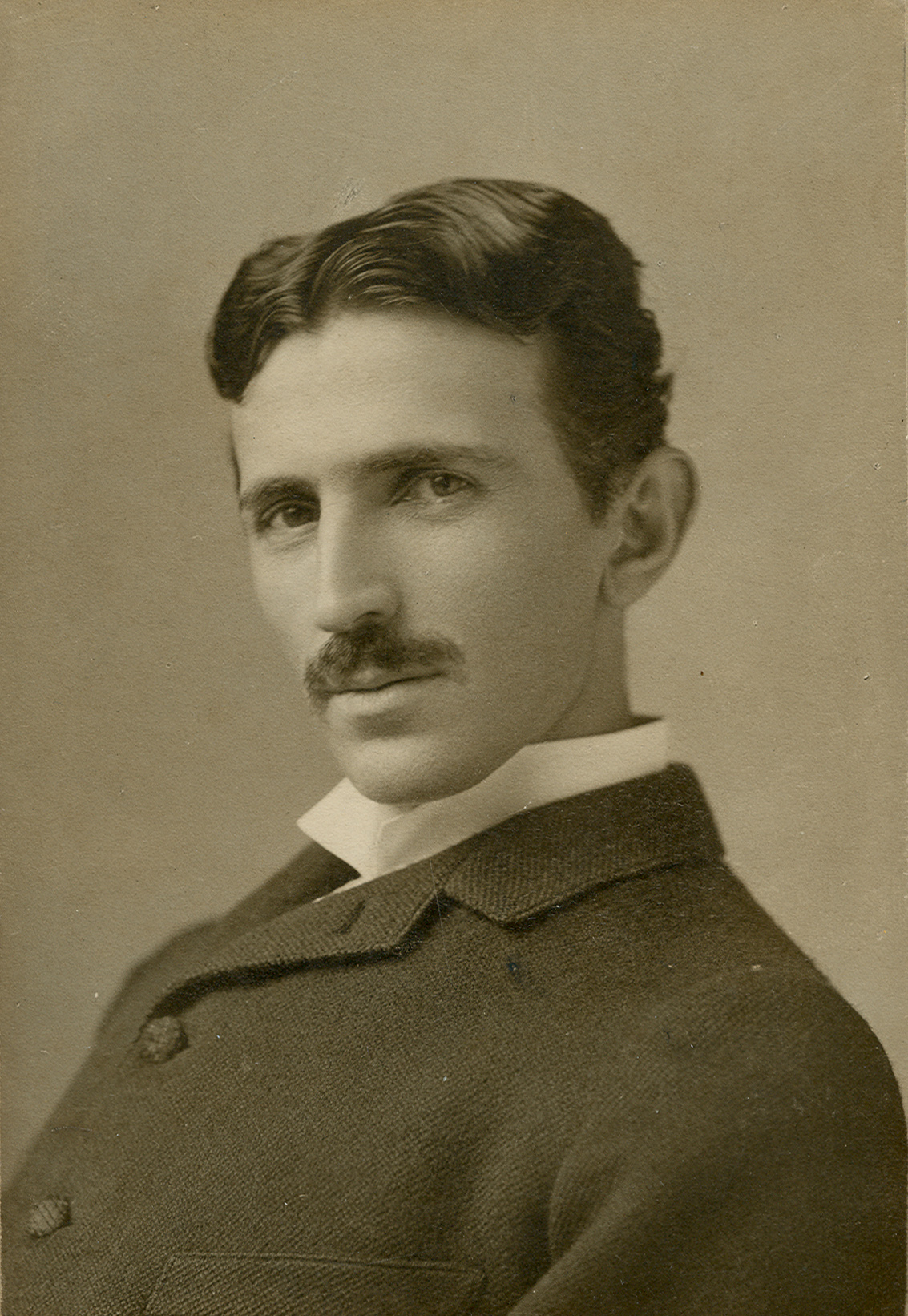
Nikola Tesla was born on 10 July 1856 in Smiljan, a small village in what was then the Austrian Empire and is today Croatia. He came from a Serbian family. His father, Milutin Tesla, was a priest in the Serbian Orthodox Church, and his mother, Đuka Mandić, was an unschooled but highly intelligent woman who invented small household tools — a talent her son clearly inherited.
Tesla was the fourth of five children. As a boy, he suffered from a serious illness and had a photographic memory: he could remember entire books and pictures he had seen only once. His older brother Dane died in an accident when Tesla was five, a loss that affected him deeply. Even as a child, Tesla was fascinated by nature and machinery, and he built small models of water wheels and other devices with his own hands.
Education and the Idea That Changed Everything
Tesla first planned to become a priest like his father, but after recovering from a near-fatal bout of cholera as a teenager, his father agreed to let him study engineering. In 1875, Tesla began studying electrical engineering at the Technical University of Graz in Austria.
At Graz, Tesla watched a demonstration of a Gramme dynamo, a machine that could work as both a generator and a motor. He became convinced that the direct current (DC) motors of the time, with their sparking commutators, were clumsy and wasteful. He believed alternating current (AC) could do the job far better — but nobody knew how to build a working AC motor.
The answer came to him in 1882 while he was walking in a park in Budapest. In a flash of inspiration, Tesla saw how a rotating magnetic field could drive a motor with no brushes and no sparks. He drew the design in the sand for a friend on the spot. The induction motor — the heart of modern industry — was born in that moment of imagination.
Career: Edison, Westinghouse, and the Current Wars
In 1884, Tesla sailed for the United States with very little money and a letter of introduction to Thomas Edison, the most famous inventor in America. He was hired at the Edison Machine Works in New York City. But the two men were very different: Edison trusted trial and error, while Tesla trusted careful thought and mathematics. After less than a year, Tesla left.
On his own, Tesla struggled for a time, even working as a day laborer. But his luck changed when two investors backed him and helped him open his own laboratory. In 1888, he demonstrated his AC induction motor and a complete system of AC power — generators, transformers, and motors working together.
That same year, the industrialist George Westinghouse bought the patent rights to Tesla’s AC system. What followed was the famous “War of the Currents”: Edison pushed his direct-current system, while Westinghouse and Tesla championed alternating current. AC won, because it could be sent over long distances at high voltage and then stepped down safely for homes. In 1893, Westinghouse used Tesla’s AC system to light the Chicago World’s Fair — a dazzling public triumph. Two years later, AC generators at Niagara Falls began powering cities, proving the system at full scale.
Major Achievements and Inventions
Tesla received more than 100 U.S. patents in his lifetime. His most important contributions include:
- The AC induction motor and polyphase system: the foundation of the modern electricity grid — the way power is generated, sent, and used almost everywhere today.
- The Tesla coil (1891): a resonant transformer that produces very high-voltage, high-frequency current. It became essential in early radio technology and is still used in science demonstrations today.
- Pioneering work in radio: Tesla experimented with wireless communication years before others, and in 1943 the U.S. Supreme Court recognized his patents as underlying key radio inventions.
- Remote control: in 1898, he demonstrated a radio-controlled boat at Madison Square Garden — one of the first remote-controlled machines ever shown in public.
- Early ideas for wireless power: Tesla dreamed of transmitting electricity through the air and the earth itself, without wires.
His boldest project was Wardenclyffe Tower on Long Island, a huge wooden tower he began building in 1901 with funding from the banker J.P. Morgan. Tesla hoped it would broadcast messages, pictures, and even electric power around the world. But Morgan pulled his support, the money ran out, and the tower was never finished. It was torn down in 1917.
The Later Years
After Wardenclyffe, Tesla’s fortunes declined. He kept inventing and filing patents, but he had lost his major backers and his best years of income. He spent his later years living in a series of hotels in New York City, feeding the pigeons in the park and holding birthday press conferences where he announced ideas that reporters often treated as science fiction.
Nikola Tesla died of heart failure on 7 January 1943, in room 3327 of the New Yorker Hotel. He was 86 years old. At the time, his name was barely known to the public — the world had taken his inventions and forgotten the inventor.
Legacy
Since the 1990s, Tesla’s reputation has recovered dramatically. He is now widely celebrated as a visionary who saw the electrical age coming before anyone else. His honors include:
- In 1960, the international unit of magnetic field strength was named the tesla in his honor.
- He received major awards during his life, including the Elliott Cresson Medal and the AIEE Edison Medal.
- The car company Tesla, founded in 2003, took his name as a tribute to his electrical genius.
- The Nikola Tesla Museum in Belgrade, Serbia, preserves his personal belongings, papers, and many of his original devices.
Above all, his legacy lives in the walls of every home: the alternating current flowing through the wires, quietly doing its work, is Tesla’s gift to the world.
Quick Answers
Who was Nikola Tesla?
Nikola Tesla (1856–1943) was a Serbian-American inventor and electrical engineer best known for developing the alternating-current (AC) power system that supplies electricity to homes and buildings worldwide.
What is Nikola Tesla famous for?
Tesla is famous for the AC induction motor, the Tesla coil, his polyphase system of electric power transmission, and early pioneering work in radio and remote control.
Why did Tesla die poor?
Although Tesla earned large sums from his AC patents, he sold or lost his patent rights, invested heavily in failed projects like Wardenclyffe Tower, and spent his later years without steady income or major backers.
Was Tesla better than Edison?
The two inventors worked differently — Edison favored trial and error, Tesla favored theory and imagination — and their systems competed in the “War of the Currents.” History judged Tesla’s AC system the practical winner for delivering power over long distances.
Watch the Full Documentary
Prefer watching? The World Biographies YouTube channel is preparing a full documentary on Nikola Tesla’s life and inventions — check the channel for the latest upload.
Conclusion
Nikola Tesla imagined the future with unusual clarity and then built it, piece by piece. He gave the world the power system it still runs on, yet he never received the wealth or fame his work deserved during his lifetime. Today, his story reminds us that true genius is not always rewarded in its own time — but its light keeps shining long after.
Found this biography useful? Browse more life stories on World Biographies — from scientists and inventors to leaders and artists — and subscribe to the World Biographies YouTube channel for the full documentaries.
Leave a Reply