In a cold, leaky shed in Paris, a young woman spent years stirring huge iron pots of dark mineral, hunting for something nobody could see. Friends thought she was wasting her life. She kept working anyway. Her name was Marie Curie — and what she found inside those pots changed science forever.
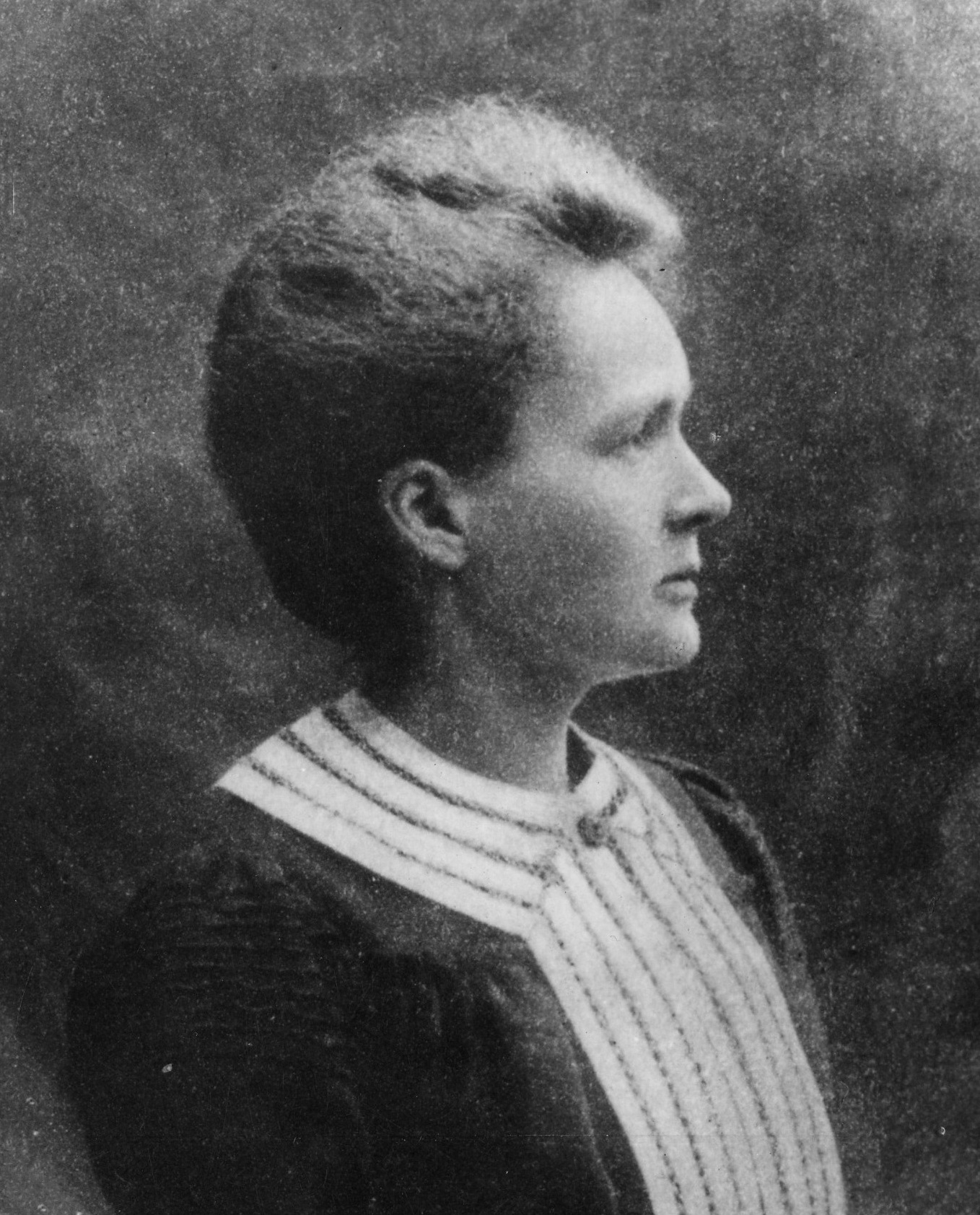
Marie Curie was a Polish and French physicist and chemist. She is the first woman to win a Nobel Prize, and to this day she is the only person to win Nobel Prizes in two different scientific fields: physics and chemistry. Her work on radioactivity opened the door to modern atomic science, X-ray medicine, and cancer treatment. Her story is one of hard work, honesty, and a rare kind of courage.
Early Life
Marie Curie was born Maria Salomea Skłodowska on 7 November 1867 in Warsaw, which was then part of the Russian Empire. Her parents were both teachers. Her mother died of tuberculosis in 1878, when Marie was only ten, and the family faced real money problems.
Marie was a brilliant student, but the Russian authorities did not allow women to attend university in Poland. She refused to give up. She studied at a secret school called the Flying University, which taught women in private homes away from the eyes of the police. At the same time, she worked for three years as a governess to help her older sister Bronisława finish medical school in Paris. The two sisters had a deal: first one studies, then the other.
In 1891, aged 24, Marie followed her sister to Paris and enrolled at the Sorbonne, the University of Paris. She lived in a tiny room, ate little, and studied day and night. Her hard work paid off: she earned her degree in physics in 1893 — first in her class — and a degree in mathematics in 1894.
Career and Research
In 1895, Marie married a French physicist named Pierre Curie. It was a true partnership. The couple shared a small apartment, a love of science, and later two daughters, Irène (born 1897) and Ève (born 1904).
For her doctorate, Marie chose a strange new mystery. The physicist Henri Becquerel had discovered that uranium gives off unknown rays. Marie decided to find out where these rays came from. Working in a simple shed with basic equipment, she made a daring guess: the rays came from inside the atom itself. She gave the phenomenon a new name — radioactivity.
She tested a mineral called pitchblende and found it gave off even stronger rays than pure uranium. That meant a new, unknown element was hiding inside it. Marie and Pierre worked side by side to separate it, using tons of material in their little shed. In 1898, they announced the discovery of two new elements. Marie named the first polonium, after her home country Poland. The second she named radium, from the Latin word for “ray”.
In 1903, Marie became the first woman in France to earn a doctorate in physics. That same year, she shared the Nobel Prize in Physics with Pierre Curie and Henri Becquerel for their work on radioactivity. She was the first woman ever to win a Nobel Prize.
Tragedy struck in 1906. Pierre was killed in a street accident in Paris, leaving Marie a widow with two young daughters. The Sorbonne offered her Pierre’s professor chair — making Marie the first woman professor at the university.
She did not stop. In 1910, she isolated radium as a pure metal. In 1911, she won the Nobel Prize in Chemistry on her own, for the discovery of radium and polonium. No other person has ever won Nobel Prizes in two different sciences.
When World War I began, Marie turned her science to saving lives. She built mobile X-ray units — small cars with X-ray machines inside, nicknamed the “Little Curies” — and drove them to field hospitals near the front lines. She also trained young women to operate the machines, so wounded soldiers could be treated faster.
Major Achievements
- Discovered two chemical elements — polonium and radium (1898).
- Coined the word “radioactivity” and explained that radiation comes from within the atom.
- First woman to win a Nobel Prize — Physics, 1903, shared with Pierre Curie and Henri Becquerel.
- Only person to win Nobel Prizes in two different sciences — Chemistry, 1911, for radium and polonium.
- First woman professor at the University of Paris (Sorbonne), 1906.
- Isolated pure radium as a metal in 1910.
- Pioneered mobile X-ray units (“Little Curies”) that treated soldiers in World War I.
- Founded the Curie Institute in Paris (1920) and a second institute in Warsaw (1932); both remain major medical research centres today.
Legacy
Marie Curie died on 4 July 1934 of aplastic anaemia, caused by years of exposure to radiation — the invisible force she had discovered. She had often carried samples of radium in her pockets, not knowing the danger.
Her legacy is enormous. In 1921, she visited the United States, where President Warren G. Harding presented her with a gram of pure radium, bought with money collected by American women. She used her fame to raise funds for research, never for herself — she never patented her discoveries and gave her knowledge freely to the world.
The unit for measuring radioactivity, the curie, is named after her, and the chemical element curium is named after the Curie family. In 1995, she became the first woman to be buried in the Panthéon in Paris on her own merits, among France’s greatest heroes.
The Curie name continued to shine. Her daughter Irène Joliot-Curie won the Nobel Prize in Chemistry in 1935, making the Curies the family with the most Nobel Prizes in history. Today, Marie Curie remains the most famous woman in science — proof that talent, discipline, and honesty can come from anywhere, including a poor girl in occupied Poland who studied by candlelight.
Quick Answers
Who was Marie Curie?
Marie Curie (1867–1934) was a Polish-French physicist and chemist. She discovered the elements polonium and radium, coined the term “radioactivity”, and is the only person to win Nobel Prizes in two different sciences.
How many Nobel Prizes did Marie Curie win?
Two. She shared the 1903 Nobel Prize in Physics with Pierre Curie and Henri Becquerel, and she won the 1911 Nobel Prize in Chemistry on her own.
What did Marie Curie discover?
She discovered two new chemical elements — polonium (1898) and radium (1898) — and explained radioactivity: the idea that atoms themselves can give off energy. This discovery led to modern atomic physics, X-rays in medicine, and cancer radiotherapy.
How did Marie Curie die?
She died on 4 July 1934 of aplastic anaemia, a blood disease caused by her long years of working with radioactive materials without protection.
Conclusion
Marie Curie’s life shows what one determined person can do against every obstacle — poverty, the loss of her husband, and a scientific world that did not welcome women. She never chased fame or money; she chased the truth. Her discoveries still save lives every day in hospitals around the world.
If this story inspired you, watch the full documentary on the World Biographies YouTube channel and share this article with someone who loves science.
Leave a Reply